
circle

Governing Legacy: Going beyond the Governance Marathon

In an article published in FFI Practitioner, LGA Advisor Jeremy Cheng explores the dynamic nature of legacy within family enterprises and the critical role of governance in its evolution. He emphasizes that legacy is not a static inheritance, but a co-constructed entity shaped by interactions between legacy “senders” (e.g., founders) and “receivers” (e.g., successors). This perspective challenges the traditional approach of preserving legacy through rigid governance structures, advocating instead for adaptable systems that accommodate evolving interpretations across generations.

In a study titled The Governance Marathon, sponsored by the FFI 2086 Society, Jeremy and his co-authors introduced the concept of “governance dynamic durability.”

The essence of dynamic durability lies in maintaining an open, living, organized, and adaptable governance system. Governance is a social practice with a technical component. The system remains alive and open due to the underlying governing practices, while the technical component defines essential organizational boundaries. Families, with their unique characteristics, activate and reactivate specific building blocks of dynamic durability. These include (i) Space; (ii) Multi-role participation; (iii) Alignment; (iv) Regeneration; and (v) Tackling Legitimacy. Together, these elements form what we refer to as the G-SMART model of dynamic durability (see Figure 1).
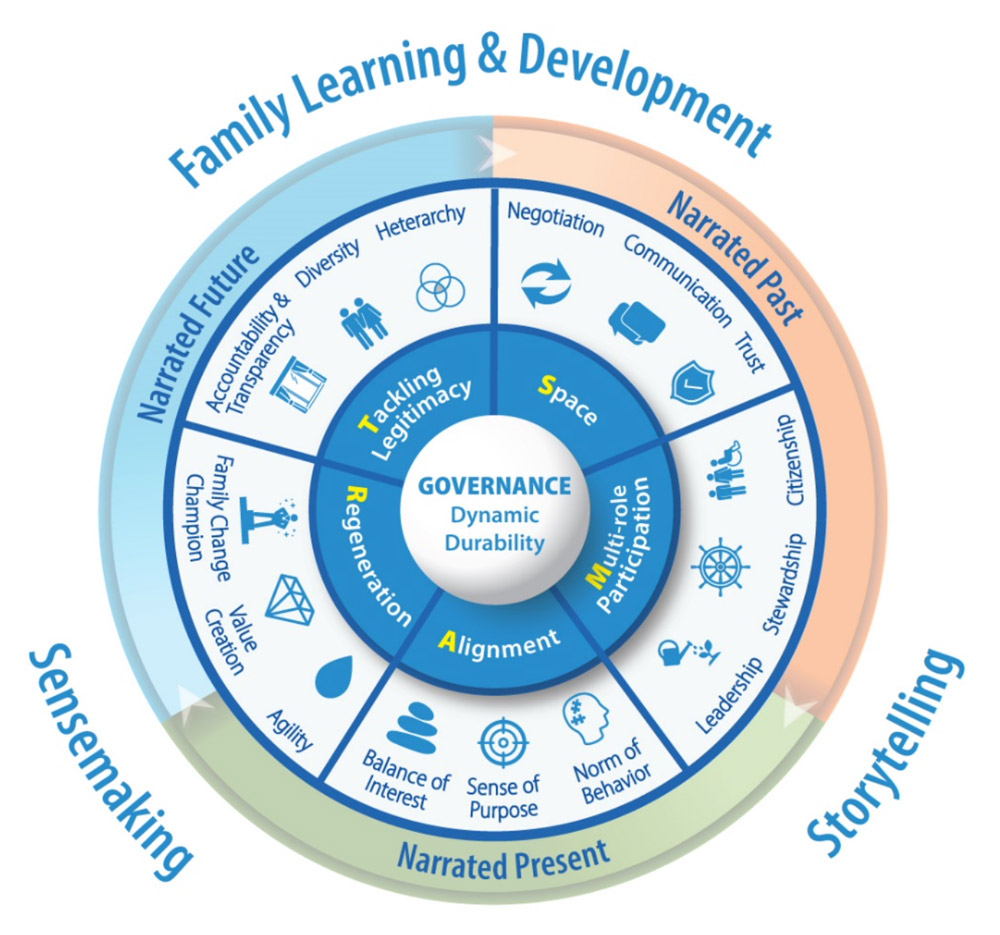
The G-SMART Model of Dynamic Durability

By applying this model, families can develop governance systems that are both durable and dynamic, facilitating the continuous co-creation of legacy that resonates with all stakeholders. 

For advisors, understanding a family’s temporal orientation toward legacy is crucial. Once this orientation is clear, they can work with client families to develop an effective approach to governing their legacy.

Jeremy has developed a model that encompasses four distinct approaches to governing legacy, namely (i) Preservation, (ii) Restoration, (iii) Regeneration, and (iv) Co-creation. Each approach caters to families in different life stages. Families will have to adjust their approach as their anticipated futures evolve across generations.
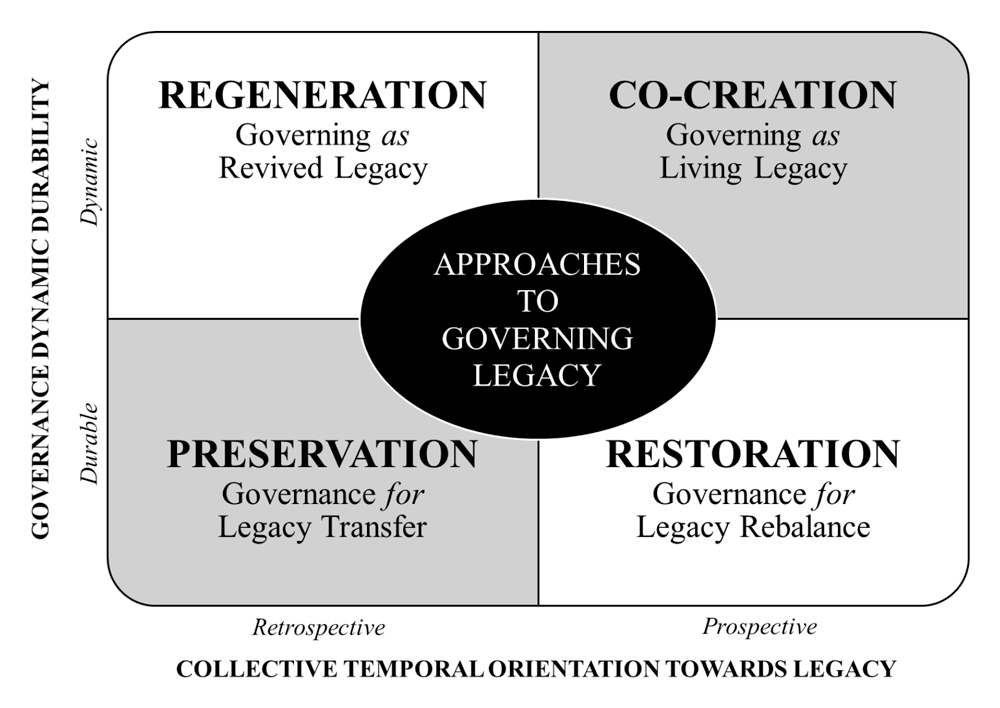
Approaches to Governing Legacy

The full FFI article is available here.

Author(s)

Related services

Preferred Language:


Lansberg Gersick Advisors complies with GDPR guidelines. Please confirm you agree to receiving Emails from us:

Please check the box to agree to our data protection policy

We use Mailchimp as our marketing platform. By clicking below to subscribe, you acknowledge that your information will be transferred to Mailchimp for processing. Learn more about Mailchimp's privacy practices here.

Recommended for you

Newsletter

LGA Insights – January 2026

Welcome to the first edition of LGA Insights for 2026!   As we embark on another year with fresh wind in our sails, we are grateful for

Articles

Family Governance: Can AI Become Your Trusted Advisor?

The rise of Artificial Intelligence (AI) is not merely a technological shift; it represents a fundamental transformation reshaping every industry across the world. While the precise nature of its impact on the highly nuanced field of family enterprise consulting remains uncertain, change is upon us.

Articles

Why It Took Me Three Years to Finish HBO’s Succession and What It Teaches Us About How Not to Run a Family Enterprise

I tried to watch the award-winning HBO series on numerous occasions, stopping repeatedly, not because it wasn’t brilliant, but because it was brutal. The cynicism, humiliation, and constant power games felt too extreme. For anyone working closely with multi-generational family enterprises, this world of perpetual chaos and zero-sum power felt not only far removed from our reality, but was also a painful mirror reflecting everything that causes a family enterprise to fail.

Podcasts

Can Families Find Purpose by Giving Together?

In this episode of the LGA Lighthouse podcast, host Tim Yeung interviews Ashley Blanchard, a Partner at LGA and an expert in family philanthropy. Drawing on her co-authored study with Wendy Ulaszek for the National Center for Family Philanthropy, Ashley shares insights on how families can successfully engage the next generation, balance individual interests with collective purpose, and navigate the journey of professionalizing their philanthropic efforts.

Podcasts

Can Worry Actually Work for You to Parent with Purpose?

In this episode of the LGA Lighthouse Podcast, host Tim Yeung speaks with psychotherapist and author Dr. Dana Dorfman about her book, When Worry Works: How to Harness Your Parenting Stress and Guide Your Teen to Success. They discuss how parents, especially those in successful family enterprises, can transform their achievement-driven anxiety into intentional, values-based parenting.